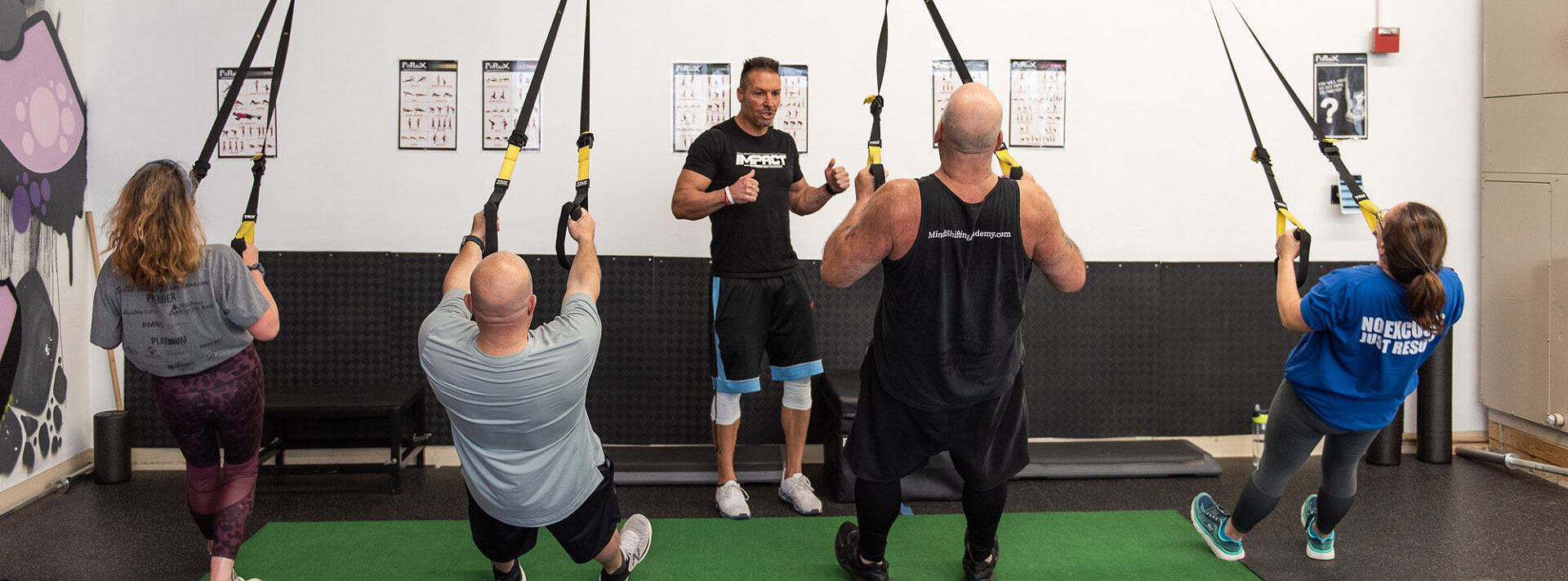

When most people think about strength training, they think about lifting heavier weights, building muscle, burning calories, and getting stronger.
And yes—we want all of that.
But there’s a much bigger reason to strength train:
Strength training can help us maintain and restore the movement options that everyday life slowly takes away.
As we spend more time sitting, driving, working at computers, and repeating the same positions day after day, our bodies adapt. Over time, those adaptations can influence how our rib cage, pelvis, spine, shoulders, hips, knees, and feet move.
Purposeful strength training gives us an opportunity to challenge those patterns, build strength in different positions, and help our bodies stay capable of handling the demands of everyday life.
Think of Strength Training Like Brushing Your Teeth
You wouldn’t brush your teeth once and expect them to stay healthy forever.
You brush consistently because life keeps happening.
Your body works the same way.
Every day, we accumulate hours in similar positions. We sit at a desk. We drive. We look at our phones. We spend time in front of screens.
None of these things are inherently bad. The problem is that our bodies can become very good at the positions we spend the most time in—and gradually lose access to other positions.
That’s one reason consistent strength training and mobility work can be so valuable.
We aren’t simply trying to make muscles tired.
We’re giving the body opportunities to move, stabilize, absorb force, produce force, and become stronger through a greater variety of positions.
Why Shoulder Blade Movement Matters for Healthy Shoulders
Take the shoulder blade, or scapula.
You may have heard the cue to keep your shoulder blades “down and back.” While that position can be useful in certain situations, your shoulder blades aren’t designed to stay pinned there all day.
They’re supposed to move around the rib cage.
A healthy shoulder blade needs the ability to:
- Elevate and depress
- Protract and retract
- Rotate upward and downward
That movement matters because the shoulder blade, rib cage, and upper arm all have to work together.
When the rib cage and shoulder blade can move appropriately, the shoulder joint has a better opportunity to function efficiently. That also allows the rotator cuff muscles to do what they’re designed to do: help stabilize and control the shoulder joint.
Good strength training should therefore do more than strengthen your arms and shoulders. It should expose the shoulder complex to appropriate movement and progressively build strength and control.
Strong Hips Need Movement Options Too
Our hips face a similar challenge.
Many adults spend a significant portion of the day sitting or in repetitive postures. Over time, we can become less comfortable accessing certain hip and pelvic positions.
That can matter far beyond the gym.
Your hips play an important role when you:
- Walk and run
- Climb stairs
- Balance on one leg
- Shift your weight from side to side
- Golf
- Play pickleball or tennis
- Hike
- Get up and down from the floor
- Carry groceries
- Play with your kids or grandkids
Effective strength training for adults should help you develop the strength and control to handle these movements—not simply make your legs tired.
Exercises that appropriately challenge hip flexion, extension, rotation, lateral movement, and single-leg stability can help build a body that is better prepared for real life.
Want to Move and Feel Stronger?
If stiffness, old movement habits, or a lack of confidence are keeping you from doing the activities you enjoy, you don’t have to guess your way through your workouts.
At Impact, we help adults build strength, improve movement, and train for the things they want to keep doing outside the gym.
Your Feet Are Part of Your Strength Training Program
We also can’t forget about the feet.
Your feet are your connection to the ground, and they need the ability to adapt to different forces and positions.
For example, pronation—when the foot becomes more flexible and flattens—isn’t automatically a bad thing. Pronation is one of the ways the body can help absorb force.
But your foot also needs the ability to move in the opposite direction and become more rigid so you have a strong platform to push from.
In other words, we need options.
If someone spends most of their time in one foot position and loses the ability to transition effectively between positions, it can change how forces travel up the body.
The foot, ankle, knee, hip, and pelvis are all part of a connected system.
That’s why intelligent strength training doesn’t ignore the feet. How you interact with the ground can influence everything happening above them.
Good Strength Training Teaches You to Handle Force
This brings us to one of the biggest differences between simply exercising and following a well-designed strength training program.
The goal isn’t just to burn calories or make your muscles tired.
We want to teach your body to:
- Absorb force
- Control force
- Produce force
- Create stability
- Move through different positions
- Adapt to different demands
Those qualities matter whether you’re picking up a heavy dumbbell or stepping off a curb.
They matter when you’re carrying luggage through an airport, chasing a tennis ball, swinging a golf club, walking on an uneven trail, or getting down on the floor with your grandkids.
Ultimately, functional strength training should prepare you for life outside the gym.
Consistency Beats the “Perfect” Workout
Remember the toothbrush analogy?
One amazing workout isn’t enough.
You don’t need the perfect exercise program. You don’t need to leave every workout exhausted. And you certainly don’t need to destroy yourself in the gym to make progress.
You need the right exercises, appropriate coaching, progressive strength training, and enough consistency to keep developing the qualities your body needs.
A well-designed strength program should meet you where you are today while progressively preparing you for where you want to go.
Build Strength for the Life You Want to Live
At Impact, our goal isn’t simply to build stronger muscles.
We want to build stronger, more capable humans who are prepared for life.
That means helping you develop the strength, movement, stability, and confidence to continue doing the things you love—whether that’s playing golf, competing on the pickleball court, traveling, hiking, playing with your family, or simply moving through your day without constantly worrying about what your body can and can’t handle.
Strength training isn’t only about what you can lift today.
It’s an investment in what you want your body to be capable of tomorrow.
Ready to Start Strength Training Differently?
If you want a strength training program designed around moving better, getting stronger, and staying active for the long term, we’d love to help.
Schedule a consultation with Impact and find out how intelligent, personalized strength training can help you build a stronger body for life.
Let’s keep moving.
Coach Peter