Hey Impact Family and friends,
Most adults over 40 think knee pain means their knees are worn out.
Usually, that is not the problem.
The knee is often the structure forced to absorb stress because something else in the system is not doing its job.
At Impact MetroWest, we assess movement differently. We look for the mechanical leaks that change how force moves through the body.
Can the rib cage expand in the frontal plane?
Can the foot pronate and create internal rotation through the tibia around the subtalar joint?
Can the hip access internal rotation during gait, hurdle stepping, stairs, and single-leg loading?
Can the thoracic spine rotate and expand without the low back compensating?
Can the body create pressure, absorb force, and coordinate movement efficiently?
Because if those things are missing, the knee usually pays the price.
That is why random exercises often fail.
You cannot strengthen a compensation pattern forever and expect the system to improve.
Instead, we follow a 5-step process.
1. Restore Expansion
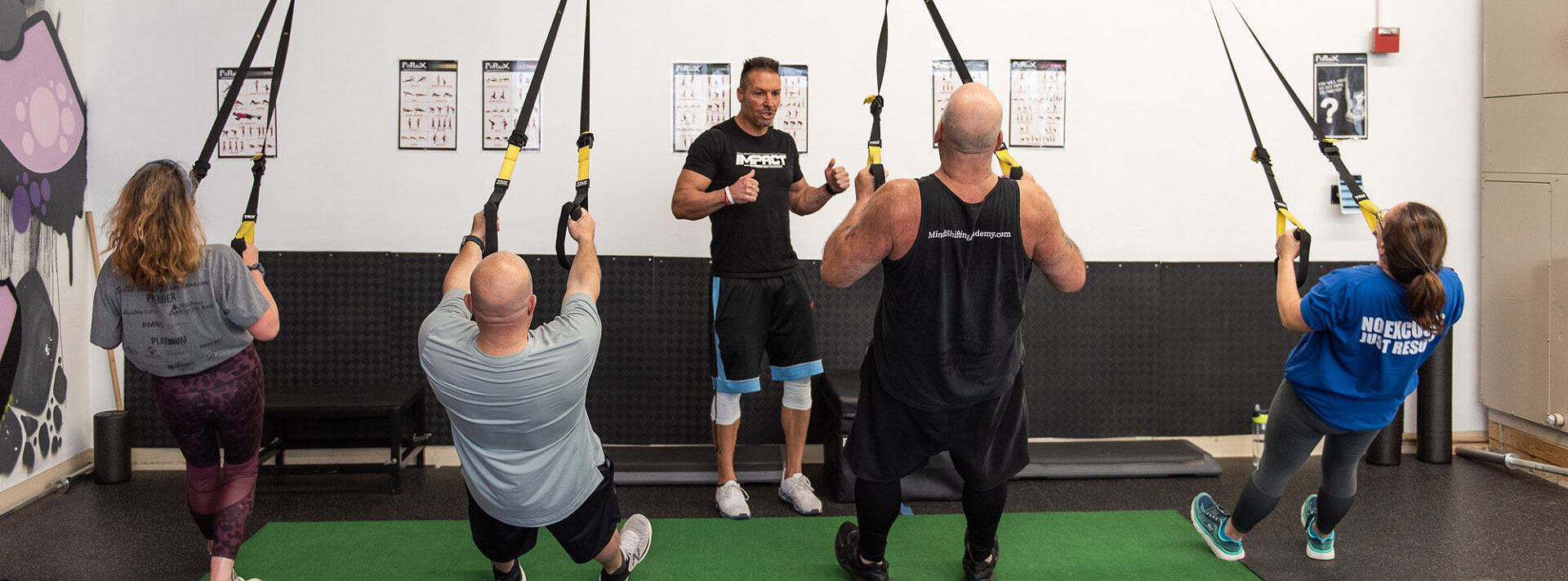
Most adults live compressed. Limited frontal plane expansion changes rib mechanics, pelvis orientation, hip access, and foot pressure. So we first restore expansion through breathing, reaching, trunk rotation, and positional work.
2. Rebuild Foot Function
The foot is supposed to adapt. If the foot cannot pronate, the tibia cannot internally rotate effectively around the subtalar joint. That changes how the knee tracks during walking, stairs, lunges, and deceleration. We restore pressure management from the ground up.
3. Reclaim Hip Internal Rotation
Single-leg movement requires hip IR. Without it, the pelvis shifts, the knee collapses, or the low back takes over. This shows up everywhere:
- going upstairs
- walking
- hurdle stepping
- split squats
- balance work
- gait mechanics
If you cannot access hip IR, your body loses movement options.
4. Improve T-Spine Mobility and Rotation
A stiff thoracic spine forces compensation below it.
The pelvis rotates poorly.
The hips lose clean motion.
The knee absorbs stress.
We train thoracic movement because rotation is essential for efficient gait, force transfer, and athletic movement after 40.
5. Dose the Weak Pattern
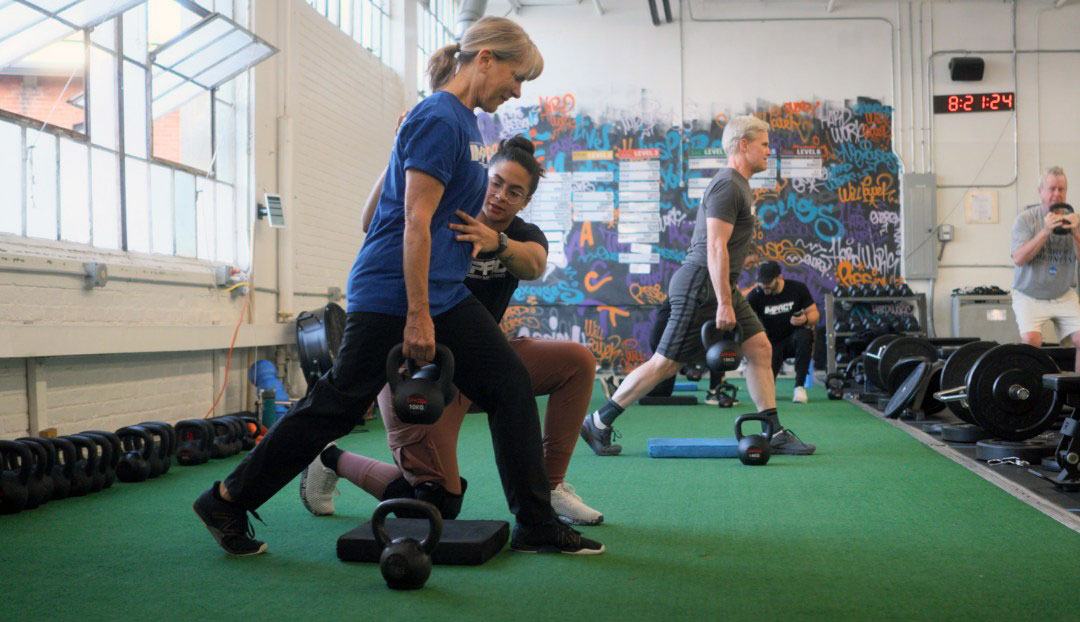
This is where real training begins. We identify inhibited patterns and progressively load them.
Not randomly.
Precisely.
We use movement quality, positional awareness, and progressive strength work to teach the nervous system better solutions. That is the goal.
Not just stronger muscles.
A more robust peripheral nervous system.
Better coordination.
Better force absorption.
Better movement variability.
Better confidence.
Because strength after 40 is not about surviving workouts.
It is about building a body that can adapt.
That is how people start walking stairs without hesitation again.
That is how people get back to hiking, golf, pickleball, lifting, and living confidently.
You are not fragile.
Your system simply needs better inputs.
If knee pain has been limiting your movement, we would love to help you assess what your body may actually be missing.